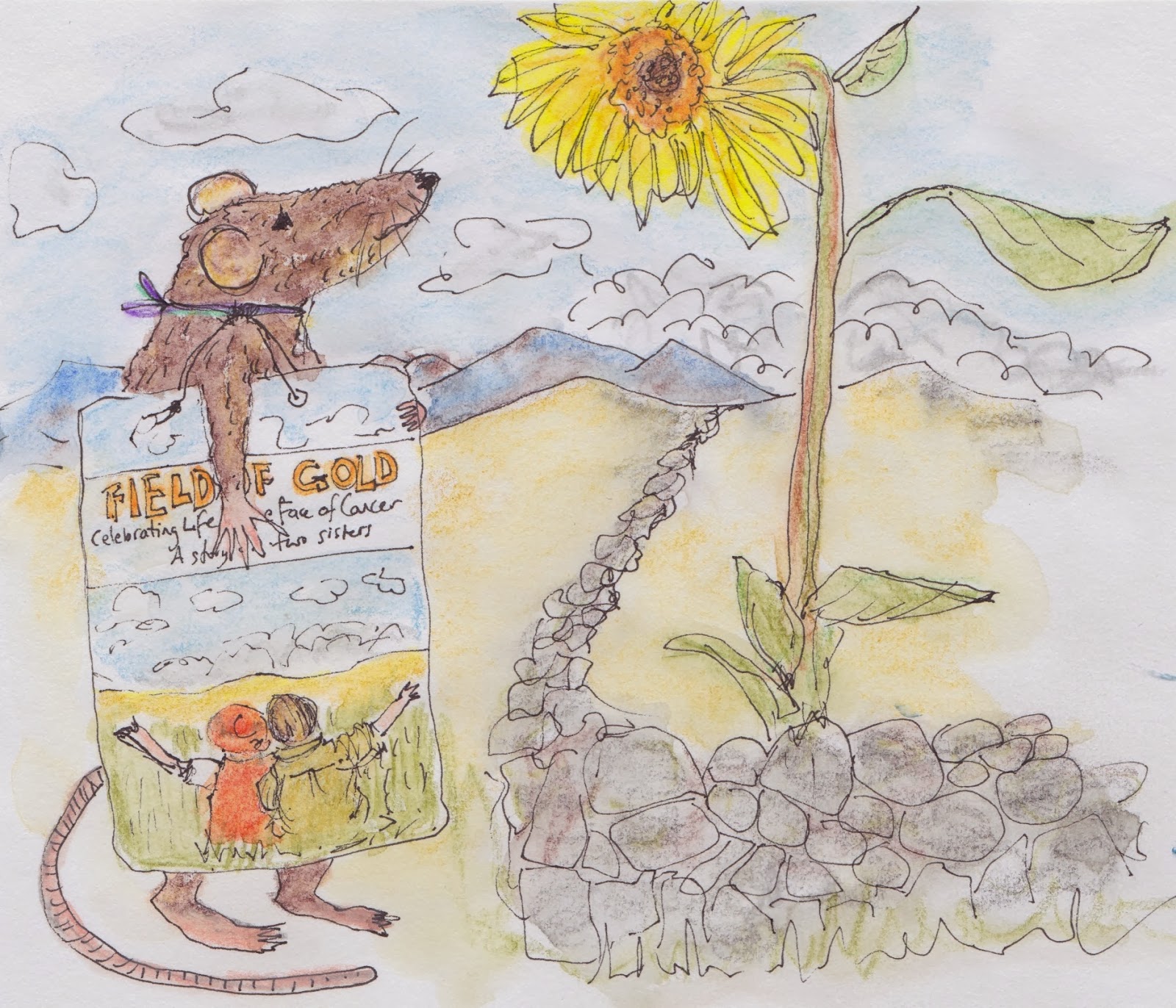
Ratty is sounding (as I am writing) the last post for this blogspot. Rosa Mira Books is moving here, taking the blog with it: a brand new website that's simple for me to manage, and simple for readers to browse.
So without further fanfare: let's go.
Wednesday, 6 May 2015
Wednesday, 15 April 2015
Packing a punch, nonviolently — interview with Raymond Huber
This time next week I'll be winging my way to Dunedin for the launch of Raymond Huber's Peace Warriors, a book that packs a nonviolent punch. He wrote it with intermediate-aged children in mind, but in fact it's a though-provoking anecdotal handbook for anyone wanting to zest up their thinking on this salient topic: the making of peace and the ending of violence and war.
Mākaro Press have made a beautiful job of the hard copy publication and Rosa Mira is privileged to be converting their book to digital. I asked Raymond a few questions.
What was the initial inspiration for Peace Warriors? As a child I loved stories about humble heroes (such as Hobbits) facing great evil. The idea for a book of true stories about non-violent resistance came after reading We Will Not Cease by Archibald Baxter. I was amazed I’d never come across this inspiring story when I was a teacher – there were children’s books about war heroes but none about peace heroes. I discovered many exciting stories of peaceful resistance in wartime, during dictatorships, and of people-power movements.
Do you have a favourite story from the book? It’s those electrifying moments when brute force is dumbfounded by love: the Jewish children hidden under the noses of the Nazis; Maori girls stopping the army with skipping ropes; helicopter gunships grounded by Filipino people power; the Chinese man with grocery bags halting a column of tanks.
Did you find common themes in the lives of the people you interviewed or researched? Yes. They were mostly ‘ordinary’ people who took a stand against oppression; they all had a fierce determination to see things through; and they believed, as one said, that ‘it matters what every single one of us does’.
Has working on the book altered the way you see the world? I have more hope for the future when I read about people who’ve stood up to dictators; and see that people-power campaigns have been more successful than military solutions.
What would be the best possible outcome of having your book out in the world? That it would encourage young readers to debate war and peace, and realise that violence is not the greatest human force in the world. That our government would champion non-violent conflict resolution and welcome more refugees here.
Do you want to mention anybody involved in the publishing process? A grant from Quaker Peace and Service Aoteraoa kept the project alive (after several rejections) until Mary McCallum (Mākaro Press) embraced the book. I’m very grateful to author David Hill for his encouraging endorsement. I love the ‘handbook’ style design by Paul Stewart and the cover by Hugh Todd which expresses the essence of a Peace Warrior. About $1.25 from each sale goes to Oxfam NZ who are active in peace-making and disarmament issues. This donation is an important part of the ‘people power’ spirit of the book, that every small act contributes to change.
Mākaro Press have made a beautiful job of the hard copy publication and Rosa Mira is privileged to be converting their book to digital. I asked Raymond a few questions.
What was the initial inspiration for Peace Warriors? As a child I loved stories about humble heroes (such as Hobbits) facing great evil. The idea for a book of true stories about non-violent resistance came after reading We Will Not Cease by Archibald Baxter. I was amazed I’d never come across this inspiring story when I was a teacher – there were children’s books about war heroes but none about peace heroes. I discovered many exciting stories of peaceful resistance in wartime, during dictatorships, and of people-power movements.
Do you have a favourite story from the book? It’s those electrifying moments when brute force is dumbfounded by love: the Jewish children hidden under the noses of the Nazis; Maori girls stopping the army with skipping ropes; helicopter gunships grounded by Filipino people power; the Chinese man with grocery bags halting a column of tanks.
![]() |
| Peace Warrior Raymond Huber has now and then been mistaken for Tintin. Image by Hugh Todd who was once cartoonist for the ODT. |
Has working on the book altered the way you see the world? I have more hope for the future when I read about people who’ve stood up to dictators; and see that people-power campaigns have been more successful than military solutions.
What would be the best possible outcome of having your book out in the world? That it would encourage young readers to debate war and peace, and realise that violence is not the greatest human force in the world. That our government would champion non-violent conflict resolution and welcome more refugees here.
Do you want to mention anybody involved in the publishing process? A grant from Quaker Peace and Service Aoteraoa kept the project alive (after several rejections) until Mary McCallum (Mākaro Press) embraced the book. I’m very grateful to author David Hill for his encouraging endorsement. I love the ‘handbook’ style design by Paul Stewart and the cover by Hugh Todd which expresses the essence of a Peace Warrior. About $1.25 from each sale goes to Oxfam NZ who are active in peace-making and disarmament issues. This donation is an important part of the ‘people power’ spirit of the book, that every small act contributes to change.
![]() |
| Cover image and design by Hugh Todd (yes, my brother) |
Wednesday, 25 March 2015
Self-publication looks up?
At the risk of repeating myself, Rosa Mira's new website is millimetres away. It's just a matter of the two busy people responsible (yours truly and sib) coordinating over the last few details.
Meanwhile (I wonder if that's my most frequently used paragraph starter), I read this article called 'Self-publishing matters' about the popularity and destigmatisation of DIY. What do you think? I think that, even so, not every writer wants to go it alone. Many value a publisher's editorial judgment and input, design capabilities, ebook production and marketing know-how ... and that's where Rosa Mira comes in — with traditional publishing values and an innovative, collaborative model.
I'm currently reading a promising manuscript, one author is making small structural changes to hers, and two are waiting for me to pull my editorial hat down hard and get started.
It's always a thrill to see Rosa Mira authors (possibly not how they describe themselves primarily, but I'm entitled) out doing beautiful things in the written world. In April Carolyn McCurdie is going to have her first (ridiculous that her work hasn't been in mass circulation for the last decade) book of poetry Bones in the Octagon published by Mākaro Press. More when I have one in my hand.
Sue Wootton recently won the 2015 Caselberg Trust International Poetry Prize for her poem 'Luthier'. I happen to know she's just completed her Masters (submitted — that's 'completed', right?) so we might see more of her poetry and fiction out on the streets in the near future.
There's more but my skin is coming of age and I shortly have an appointment with a flask of liquid nitrogen.
Meanwhile, carry on: Writing is its own reward, wrote Henry Miller.
Meanwhile (I wonder if that's my most frequently used paragraph starter), I read this article called 'Self-publishing matters' about the popularity and destigmatisation of DIY. What do you think? I think that, even so, not every writer wants to go it alone. Many value a publisher's editorial judgment and input, design capabilities, ebook production and marketing know-how ... and that's where Rosa Mira comes in — with traditional publishing values and an innovative, collaborative model.
I'm currently reading a promising manuscript, one author is making small structural changes to hers, and two are waiting for me to pull my editorial hat down hard and get started.
It's always a thrill to see Rosa Mira authors (possibly not how they describe themselves primarily, but I'm entitled) out doing beautiful things in the written world. In April Carolyn McCurdie is going to have her first (ridiculous that her work hasn't been in mass circulation for the last decade) book of poetry Bones in the Octagon published by Mākaro Press. More when I have one in my hand.
Sue Wootton recently won the 2015 Caselberg Trust International Poetry Prize for her poem 'Luthier'. I happen to know she's just completed her Masters (submitted — that's 'completed', right?) so we might see more of her poetry and fiction out on the streets in the near future.
There's more but my skin is coming of age and I shortly have an appointment with a flask of liquid nitrogen.
Meanwhile, carry on: Writing is its own reward, wrote Henry Miller.
Friday, 13 March 2015
Winds and novels
In two days, Cyclone Pam will bear down on New Zealand's east coast bays, islands and promontories. Already the waves south of Whangarei are huge and forceful. As I wrote in my novel Island, "… it [the storm] has no designs on any of these [objects in its path]; it moves according to its intrinsic energies and those devolving upon it from the greater systems of the earth." However, Pam is the greatest weather system currently on earth so perhaps that should read 'evolving'. Whatever, however, it made for an exciting swim just now: should I dive through this looming monster or race to shore before it crashes?
Distractions! I have manuscripts to edit — several novels, even though I saw myself write recently that they're too unweildy and time-consuming for a solo publisher. Nevertheless, as I also wrote more recently, I've been changing my model and the new one is about sharing — energy, input, skills, marketing and income — with the author. Self-publishing has become respectable, but it's still a hard and lonely road, too often with a product that lacks the quality checks of traditionally published work. Publishing in the new (it might be said chaotic but certainly unpredictable) publishing climate is also a bit lonely and hazardous. Teaming up makes good sense to me, and this particular handful of novelists concurs. (One didn't and has beat a retreat, thriller in hand.) Thanks to those who go on believing that a novel's worth writing, and those who go on reading them.
May all in the cyclone's path find safety.
Distractions! I have manuscripts to edit — several novels, even though I saw myself write recently that they're too unweildy and time-consuming for a solo publisher. Nevertheless, as I also wrote more recently, I've been changing my model and the new one is about sharing — energy, input, skills, marketing and income — with the author. Self-publishing has become respectable, but it's still a hard and lonely road, too often with a product that lacks the quality checks of traditionally published work. Publishing in the new (it might be said chaotic but certainly unpredictable) publishing climate is also a bit lonely and hazardous. Teaming up makes good sense to me, and this particular handful of novelists concurs. (One didn't and has beat a retreat, thriller in hand.) Thanks to those who go on believing that a novel's worth writing, and those who go on reading them.
May all in the cyclone's path find safety.
Friday, 6 March 2015
Oh those grants
Hmm, no publishing grant forthcoming this round. I hadn't realised how heavily I was resting one elbow on that presumed ledge. I've been walking a bit lopsided since it fell away yesterday. I'd put a strong case for two strong novels. But then, every applicant believes passionately in what they're doing or they wouldn't have the fortitude to jump through the application hoops. All strength to those who received and even more to those who didn't. Let us carry on regardless!
I'll be asking authors to share more responsibility for ebook production (and receive the same proportion in revenue) or I'll sizzle up in the anxiety of doing all and paying all myself. I think that is the way forward — somewhere between the traditional model of publisher footing all bills and author earning ten percent, and the hard-work, lonely model of self-publication. Collaborating, and having as much fun as possible in the process. More of this will be covered on the new website, to be uncovered shortly, if you believe me.
By the way, it's a year since Pam and Annie's gorgeous, brave journal was published. I'd love you to buy it. That will help in all kinds of ways.
I'll be asking authors to share more responsibility for ebook production (and receive the same proportion in revenue) or I'll sizzle up in the anxiety of doing all and paying all myself. I think that is the way forward — somewhere between the traditional model of publisher footing all bills and author earning ten percent, and the hard-work, lonely model of self-publication. Collaborating, and having as much fun as possible in the process. More of this will be covered on the new website, to be uncovered shortly, if you believe me.
By the way, it's a year since Pam and Annie's gorgeous, brave journal was published. I'd love you to buy it. That will help in all kinds of ways.
Tuesday, 3 March 2015
Back on deck
I'm so suggestible. I read an article yesterday by an inveterate blogger who said You must do it every day — in the way others say You must meditate every day — and something magical will happen — promise. Well, it won't be every day but here I go again. Mostly to tell you that I'm excited about the ebooks to be published here this year. I'd thought of flagging novels for being too long and unwieldy but when four cross your path within a few months, each credible, powerful and finely written (and editorially straightforward), that can feel like a gift you shouldn't turn down.
I've told you before that the new website will soon be ready — well, that's truer now than then. I'll be able to run it myself. Two biggish changes: first, I'll be more upfront in offering editorial services (whether or not those services lead to publication here) — I have to keep this show funded. And the other (same reason) is that the publishing model will be more collaborative, with Rosa Mira and the author sharing (or seeking out) funding for the publication process, and sharing equally, too, in the proceeds. More about that in another blog. More about everything.
For now I need to potter along to the next bay to buy a copy of NZ Listener which I'm told has several of us chipping in about the NZ indie publishing scene, thanks to Tina Shaw. To quote the lead-in: How hard is it to set up your own book publishing business? It’s not impossible – and those doing it may just keep New Zealand’s literary culture alive.
How about that? Sadly, happily, it might be true.
Still house-sitting, elderly homeowners, tiny internet allowance run out, no room for pic ...
I've told you before that the new website will soon be ready — well, that's truer now than then. I'll be able to run it myself. Two biggish changes: first, I'll be more upfront in offering editorial services (whether or not those services lead to publication here) — I have to keep this show funded. And the other (same reason) is that the publishing model will be more collaborative, with Rosa Mira and the author sharing (or seeking out) funding for the publication process, and sharing equally, too, in the proceeds. More about that in another blog. More about everything.
For now I need to potter along to the next bay to buy a copy of NZ Listener which I'm told has several of us chipping in about the NZ indie publishing scene, thanks to Tina Shaw. To quote the lead-in: How hard is it to set up your own book publishing business? It’s not impossible – and those doing it may just keep New Zealand’s literary culture alive.
How about that? Sadly, happily, it might be true.
Still house-sitting, elderly homeowners, tiny internet allowance run out, no room for pic ...
Wednesday, 24 December 2014
Peace, good will to all people …
And suddenly it was the end of the year. Many things hadn't happened although quite a few had. A hush had fallen over Rosa Mira Books. A new way of operating had been thought up and was on the point of being discussed here. A new website was being configured, new books considered ... and then Christmas arrived. The rest will have to wait. Hooray for 2015.
Thank you to all Rosa Mira's exceptional authors, readers and enthusiasts. We wouldn't exist without you.
Grateful for all that has come to pass, letting go for now of all that hasn't, let's go and enjoy our loved ones and holidays. Lie back and read heaps. Make some moments more sacred than others. Tread lightly, with bare feet. Treat ourselves kindly and let the fun shine in.
See you in the new year.
Thank you to all Rosa Mira's exceptional authors, readers and enthusiasts. We wouldn't exist without you.
Grateful for all that has come to pass, letting go for now of all that hasn't, let's go and enjoy our loved ones and holidays. Lie back and read heaps. Make some moments more sacred than others. Tread lightly, with bare feet. Treat ourselves kindly and let the fun shine in.
See you in the new year.
Thursday, 30 October 2014
The state of play
Yes, Rosa Mira Books is still here. It's had a big think about its raison d'être and it savoir faire. It's creating ways to broaden its scope, lengthen its bookshelf, serve its writers and readers, and make its ends meet and overlap.
Rosa Mira Books will say more soon.
Tuesday, 26 August 2014
Published: the now famous The (e)Book of Hat.
Today's newsletter:
New dance steps: Rosa Mira Books is linking arms with Makaro Press to bring you the digital version of The Book of Hat, named runner-up this week in the Ashton Wylie Book Awards.
"This is the real The Fault In our Stars" — Auckland Libraries
At 17, Harriet Rowland — known as Hat — learned she had osteosarcoma, a rare form of cancer that began in her knee. At the time she was a student at Queen Margaret College in Wellington, New Zealand.
Going through treatment was often a lonely time, as friends — while supportive — didn’t always understand Hat’s new life. This was until she fell in love with the character Hazel Grace from John Green’s novel The Fault in Our Stars, a girl who talks honestly and openly about living with cancer. Like her, Hat found life changed in ways that were both good and bad: falling in love and hospital stays among them. And she was surprised by how much happiness there was still to find.

Throughout her journey, Hat kept a blog called My Experience of Walking the Dog, and this book is a collection of those posts edited with the author. Why the blog title? Her parents say cancer is like a dog — fine if it stays in its own yard. Hat’s dog got out. This is her unexpected story.
Rosa Mira Books is delighted to join with Mākaro Press in presenting the ebook version of Harriet’s story which, just this week won second place in the Ashton Wylie Book Awards (sandwiched between NZ’s famed Lloyd Geering and Joy Cowley).
From its sell-out launch in February this year, The Book of Hat hardcopy went on to become a surprise hit in NZ. With $1 from each sale going to CanTeen, the blue book with a hat made of stars on the cover was bought by students and grandparents alike, and made its way into CanTeen gift packs, hospices, adult book groups, school libraries and classrooms. A surprising burst of internet sales saw it fly off as far as Moscow, Prague and Wisconsin. —Mākaro press release

The Book of Hat, the ebook, can be purchased here.
“Her writing is funny and truthful and wise, exactly like the Harriet we got to meet when she visited the set last year.” Peter Jackson, filmmaker

Tuesday, 17 June 2014
A treasure of a book
Here's a thoughtful, appreciative review of Fields of Gold published this week in the June 2014 online magazine for the New Zealand Transactional Analysis Association.
Big sisters are the crab grass in the lawn of life. Charles M. Schulz
Once
in a while, if you are lucky, you cross paths with a book that is a treasure; one
that you know you will keep – to dip into time and again – because it moves you
or expresses something for you, of life, which has been difficult to put into
words of your own. For me, Fields of Gold is such a book.
It
is not possible to generalize the experience of what it means to be a sister or
to have a sister, let alone what is means to be facing a terminal illness,
because the experiences are so profoundly personal and so varied. This book,
however, gently entwines the individual and combined experiences of sisters Annie
McGregor and Pam Morrison through the last year of Annie’s life using a journal
– ‘a shared container’ – as a means of holding something precious to them both
about what it means for one sister to face letting go of life and the other
sister to face letting go of her as a loved, life-long friend and companion.
You
know full well, as I do, the value of a sister’s affections: there is nothing
like it in this world. Charlotte Bronte
It
is tempting to use clichés when we speak of death and dying. So often we are at a loss as to what to
say to express ourselves, restricted by our sense of inadequacy and fear of saying
or doing the wrong thing. Sometimes, however, when it is too hard to find the
right words for ourselves around grief, we recognize them elsewhere, the effect
being a release of emotions held in a place of vulnerability, thus permission-giving
and healing; a ‘yes, I know about that’ kind-of-experience. This book models
permission to live life fully to the very end in such a way as to give
expression to an array of emotions and experiences from joy, exuberance and hilarity
to tenderness, bewilderment, and sorrow, which add a richness to the tapestry
of threads that hold Annie and Pam together through the daunting prospect of the
most final of separations.
You
mess with my sister, you’re messing with me! Loretta Livingstone
While Fields of Gold is written from the personal perspectives of the writers, the
writing style is inclusive of the reader through its honesty and recognition
that all life experiences, from the moment of our birth to our death, impact on
us as relational beings and affect how we feel about ourselves and others. One
of the lovely aspects of this book is that it candidly models that it is not
only ok to be real to self and to other, but that by being real we grow so much
more fully into ourselves and stand with one another with a genuine experience
of authenticity and vulnerability that refines and enhances shared moments of
genuine recognition and consequently, intimacy.
If
you have a sister and she dies, do you stop saying you have one? Or are you
always a sister, even when the other half of the equation is gone? Jodi Picoult
Pam
and Annie stand together through the progression of Annie’s cancer with an
honesty between them that is heart-warming and real, enhanced by a shared love
of music, all things creative, a joy that comes from being with those who love
them best and a generosity that is inclusive, right to the end, making room for
others to be a part of the journey armed with whatever offerings they might
bring be they practical, spiritual, emotional or otherwise. It is a gift to
write with such candor, one to the other, and reflects the underlying strength
of their sister-to-sister relationship.
My
sister and I are so close that we finish each other’s sentences and often
wonder whose memories belong to whom. Shannon Celebi
I
imagine that Fields of Gold will appeal to a wide range of readers. Having
worked in a hospice for two years myself, I know the benefit of books as a
resource when people lose their way in the complexities of grief, again because
they can be permission-giving, putting words to experiences when words can be
lost. This book is also a lovely reflection of the relationship between sisters
and a wonderful recognition of the emotional and psychological strength that
can lie between two women who have known one another throughout a shared
lifetime.
I
would like more sisters, that the taking out of one might not leave such a
stillness. Emily Dickinson
Pam
expresses a hope at the end of the book “that others in relationship will be
encouraged, when spoken words are not enough, to find a beautiful book, pick up
a pencil, and take turns to write.” I have encouraged our youngest daughter,
whose partner recently underwent major transplant surgery, to do just that. She
was immediately engaged by the idea and has asked to read the book.
I
am sure she will not be disappointed.
Sue McMenamin
![]() |
| A fanciful stalk from a field of gold and the possible reappearance of Ratty. |
Friday, 13 June 2014
A very important Hat and two leaves.
We're back. I was going to include The Rat with the pic but he scarpered, so, just the two leaves picked up from an Auckland pavement after the recent storm.
And this note to say that I'm very pleased to be working with Mary McCallum of Mākaro Press to produce an ebook version of The Book of Hat.
That's all for now. Have to go and visit the (gran') babies. More soon.
And this note to say that I'm very pleased to be working with Mary McCallum of Mākaro Press to produce an ebook version of The Book of Hat.
That's all for now. Have to go and visit the (gran') babies. More soon.
Monday, 28 April 2014
What's going on here
Ratty's still scudding about in the north, occasionally settling to some worthwhile project, more often looking as if he's doing nothing at all. Hardly ever out promoting RMB ebooks which, nevertheless, remain as potent and exceptional as they ever were.
Those of us still applying ourselves to our self-appointed tasks have been talking about publishing collaborations (digital here, beautifully produced hard copy over there — you'll hear more about it soon); I've been reading a couple of exciting manuscripts and weighing them up against my time, interest and resources (I need a team of reindeer to replicate what the rat's supposed to be doing; an ensemble of editing elves).
Some of Rosa Mira's authors have been performing wonders. Of those featured in Slightly Peculiar Love Stories, Coral Atkinson is in the throes of launching her novel Passing Through, set 'in the port of Lyttelton, in a community still recovering from World War 1'. Coral draws richly credible historical characters and atmospheres; I've read this and it lingers warmly with me.
Sue Wootton has a new book of ten poems, a collector's item called out of shape: have a look. "Handset letterpress in a soft palette of blue, green, brown and red on Magnani Velata Avorio wove mould-made Italian paper." Sounds edible, doesn't it, and I know the work will match the medium.
(I know there are others putting excellent work out into the world but if I haven't written it down, it isn't retained, so I hope any RMB authors will jog my memory and send info about your latest creations.)
Those of us still applying ourselves to our self-appointed tasks have been talking about publishing collaborations (digital here, beautifully produced hard copy over there — you'll hear more about it soon); I've been reading a couple of exciting manuscripts and weighing them up against my time, interest and resources (I need a team of reindeer to replicate what the rat's supposed to be doing; an ensemble of editing elves).
Some of Rosa Mira's authors have been performing wonders. Of those featured in Slightly Peculiar Love Stories, Coral Atkinson is in the throes of launching her novel Passing Through, set 'in the port of Lyttelton, in a community still recovering from World War 1'. Coral draws richly credible historical characters and atmospheres; I've read this and it lingers warmly with me.
Sue Wootton has a new book of ten poems, a collector's item called out of shape: have a look. "Handset letterpress in a soft palette of blue, green, brown and red on Magnani Velata Avorio wove mould-made Italian paper." Sounds edible, doesn't it, and I know the work will match the medium.
(I know there are others putting excellent work out into the world but if I haven't written it down, it isn't retained, so I hope any RMB authors will jog my memory and send info about your latest creations.)
Friday, 4 April 2014
Who's afraid to read about death?
I was talking publishing the other day (a conversation that could go on until the cows some home, go out and come home again) with Mary McCallum who's just published through Mākaro Press the extraordinary journal of Harriet Rowland, who records her last two years, living with osteosarcoma, in The Book of Hat. We touched on the difficulty of 'selling' books in which the author is facing her own death (as Annie also was in co-authoring Fields of Gold). We acknowledged the deep-rooted anxiety that to read about death and think about it is tantamount to inviting our own. All of us and especially those facing their mortality through illness are more inclined to seek stories of healing and second chances.
However, it seems that when we lay aside this natural but primitive fear, the contemplation of death and difficulty can deepen and intensify our experience of life — that's the curiously joyous truth radiating from these two books. One initially reluctant reader of Fields of Gold, told co-author Pam Morrison that through her engagement with the story she was extraordinarily and entirely released from her own (very present and pertinent) fear of death.
That's powerful writing, and it's what comes from writers who have courageously entered the darkness and found there inextinguishable light.
However, it seems that when we lay aside this natural but primitive fear, the contemplation of death and difficulty can deepen and intensify our experience of life — that's the curiously joyous truth radiating from these two books. One initially reluctant reader of Fields of Gold, told co-author Pam Morrison that through her engagement with the story she was extraordinarily and entirely released from her own (very present and pertinent) fear of death.
That's powerful writing, and it's what comes from writers who have courageously entered the darkness and found there inextinguishable light.
Wednesday, 19 March 2014
Compelling reading in Fields of Gold
Readers are finding the co-written journal Fields of Gold (Celebrating Life in the Face of Cancer: a tale of two sisters) potent, heart-aching, inspiring. You can hear surviving author Pam Morrison speaking powerfully in a radio interview here: you have to choose 'Write On with Vanda Symon' from the category list then Pam's name will be near the top of the list that comes up (and mine is under hers, speaking the previous week about Rosa Mira Books).
Reviewing the book, author Mike Crowl of Dunedin wrote: This book, which started out as a journal in which the two sisters wrote collectively, was never intended to be published. Fortunately it has been. All books that help people to understand that their journey through something painful, such as the cancer that affected one of the sisters, is both unique and universal, are of value.
Annie is a lively and outgoing personality, seen through her own words and those of Pam. The latter is quieter, perhaps more reflective, and even more vulnerable. It is the delineation of her increasing sense of powerlessness and separation that makes the book’s latter half so compelling.
Reviewing the book, author Mike Crowl of Dunedin wrote: This book, which started out as a journal in which the two sisters wrote collectively, was never intended to be published. Fortunately it has been. All books that help people to understand that their journey through something painful, such as the cancer that affected one of the sisters, is both unique and universal, are of value.
Annie is a lively and outgoing personality, seen through her own words and those of Pam. The latter is quieter, perhaps more reflective, and even more vulnerable. It is the delineation of her increasing sense of powerlessness and separation that makes the book’s latter half so compelling.
In a completely different vein, last year I almost published a cookbook-with-stories-and-photos called Fait Maison: Recipes from a Kiwi in France. I didn't go through with the process, but had found the recipes attractive, wholesome and easy to make — described as 'simple, delicious, quotidien or day-to-day recipes for homemade food, with a French and Mediterranean influence,' and commend author Rachel Panckhurst for seeing this through and publishing the ebook here.
Tuesday, 4 March 2014
Fields of Gold, published
Did you know? Fields of Gold: Celebrating Life in the Face of Cancer — a tale of two sisters, was published in the weekend. It's out there. Available here. It's Pam Morrison and Annie McGregor telling their story in journal entries, and forging a path, actually, for others (for all of us) who are likely to lose someone we love and who will need to find a way to utter those things too subtle, painful and precious to be spoken. The reach of this book is profound.
P.S. Pass it on.
P.S. Pass it on.
Tuesday, 25 February 2014
What they wrote
Here are a couple of extracts from the journal (sisters) Pam and Annie wrote the year Annie was dying. We're launching the journal on Sunday: Fields of Gold.
ANNIE Sunday 20 April 2003
Last night the kids were here. There was music playing, the sounds of whistling and chopping, cooking noises, recipes being changed. I was in front of the fire under the mohair rug. And I tell you what: I was in heaven, or pretty close to it, about five kilometres away. Sometimes I wonder: why didn’t I come to this place earlier? Then I remember – oh, that’s right!
Graham says he’s noticed some frailty in me. And there is, at times. In the mornings sometimes, the tears come – just pop out. This morning they came. I wet Graham’s pillow. But they weren’t hot tears. They were cool by the time they hit the pillow. And I think, it’s only ten days since I had the treatment. I was told I would feel terrible. But I haven’t been trampled by an elephant; I’ve been trampled by a sheepdog.
PAM Sunday 18 January 2004
Life has been far from straightforward. At times I feel like I’m in a paper boat, bobbing on a current, which takes me anywhere it pleases. At other times it’s felt like I’m under an ever-changing sky. I look up and find there’s been a dramatic shift. And I’ve had absolutely nothing to do with it.
I’ve been wrestling with the question of how to give expression to my own needs and feelings when I’m with Annie. A week ago I was feeling dismantled and, consequently, distant from her and me. Lots of crying.
Now, three days on, I think there is no place for any of this while Annie is alive. I was almost appalled that I would take any measure of sorrow into my interaction with her.
And now, as I write that, the pendulum has swung again. How could sorrow not be present? And so the sky changes. My boat sails on.
ANNIE Sunday 20 April 2003
Last night the kids were here. There was music playing, the sounds of whistling and chopping, cooking noises, recipes being changed. I was in front of the fire under the mohair rug. And I tell you what: I was in heaven, or pretty close to it, about five kilometres away. Sometimes I wonder: why didn’t I come to this place earlier? Then I remember – oh, that’s right!
Graham says he’s noticed some frailty in me. And there is, at times. In the mornings sometimes, the tears come – just pop out. This morning they came. I wet Graham’s pillow. But they weren’t hot tears. They were cool by the time they hit the pillow. And I think, it’s only ten days since I had the treatment. I was told I would feel terrible. But I haven’t been trampled by an elephant; I’ve been trampled by a sheepdog.
PAM Sunday 18 January 2004
Life has been far from straightforward. At times I feel like I’m in a paper boat, bobbing on a current, which takes me anywhere it pleases. At other times it’s felt like I’m under an ever-changing sky. I look up and find there’s been a dramatic shift. And I’ve had absolutely nothing to do with it.
I’ve been wrestling with the question of how to give expression to my own needs and feelings when I’m with Annie. A week ago I was feeling dismantled and, consequently, distant from her and me. Lots of crying.
Now, three days on, I think there is no place for any of this while Annie is alive. I was almost appalled that I would take any measure of sorrow into my interaction with her.
And now, as I write that, the pendulum has swung again. How could sorrow not be present? And so the sky changes. My boat sails on.
Friday, 21 February 2014
'seizing a pencil was a desperate act'
RMB: Pam, late last year you presented in Glasgow at a conference on ‘“Attentive Writing”: Healthcare, Authorship, and Authority’. Thank you for letting me turn a little of your presentation into a dialogue between the two of us (Penelope/RMB and Pam Morrison). I’m sorry if I’ve left you sounding even more lyrical than you are in actual conversation (but you wrote these lovely words). In it you were drawing on your own story, which we’re soon to publish as Fields of Gold: co-writing with your sister Annie McGregor the year-long journey towards her death.
PM:
It’s the story of how we together found a way to navigate life’s most certain
and possibly most cruel reality: You will lose the people that you love. Though
the story is ultimately about death, primarily it is about life. Terminal
illness is cruel, but it also potentially invites in grace, gratitude and
courage. And love.
RMB:
You’re from Dunedin New Zealand where you’re a counsellor in private practice
and a lecturer in social services and counselling.
PM:
Yes, and in both of these roles I encourage reflective writing as a useful,
sometimes vital, therapeutic tool.
RMB:
I know you as a uniquely lyrical creative writer and song-writer. So perhaps in a sense it was natural
for you to turn to writing when you learned that your beloved sister was dying?
PM:
I wrote my first entry on 12 March 2003, three days after receiving news of
Annie’s diagnosis of secondary liver cancer. Seizing a pencil was a desperate
act to make some scrawls on paper about a reality that felt too big, too crazy,
too unthinkable to absorb. Annie lived in a different city, and the journal
came with me when I visited her one week later. Within three days, we had
decided this would be a shared repository. It became our own illuminated
manuscript.
RMB:
Has the decision to publish been a hard one?
PM:
A long one! It hasn’t been an easy decision. But I have come to see that this
is both a unique story and a universal one. The details are mine and Annie’s; the
themes may well have resonance for many. For illness, loss and grief always take place in the context of
relationship.
What
we offer in Fields of Gold is an
insiders’ view. We were not researchers. We were sisters who were set reeling
by an unforeseen event. The journaling, which came about almost by accident,
was our instinctive response to the shocking intrusion of cancer into our
lives.
The journals have lived for a decade on my
bookshelf at home. The content was typed up and shared with friends and family
while Annie was still alive. It was then shared with an ever-widening circle of
people.
Now with Annie’s express blessing before she
died, the journals come alive again, marking the tenth anniversary of her death
on 10 March 2003.
RMB:
Thank you, Pam. Dear readers, Fields of Gold will be published on 2
March.
Monday, 10 February 2014
Publishing in the south
Like Ratty below, we've been heading south over the last week, pulling onto the roadside as needed to attend to Rosa Mira business. Yesterday we reached Dunedin. It's good to have the new 10k books out in the world and if you've missed them by any chance, they're summed up here: yes, here.
The first reader review is in for Albatross. Dusty Sandison from New Brunswick writes: "Three thoughtful stories that share the pained thread of grief, regret, remorse — and hope. The writer delves into relationships with friends, strangers, family and self that are touching, even heartbreaking, and make you look inward and examine your own journey in life."
This month, I have my head down preparing Rosa Mira's next exceptional publication, Fields of Gold, subtitled: Celebrating Life in the Face of Cancer, A story of two sisters. It's the journal, written over the course of a year, of two remarkable women, one of whom is dying. Pam Morrison wrote for both herself and sister Annie McGregor, recording their shock, love, bafflement, humour, deep respect, grief — the rich life that flowed between them. I'll be saying more about it in the coming weeks, and introducing you to Pam who lives here in Dunedin.
The first reader review is in for Albatross. Dusty Sandison from New Brunswick writes: "Three thoughtful stories that share the pained thread of grief, regret, remorse — and hope. The writer delves into relationships with friends, strangers, family and self that are touching, even heartbreaking, and make you look inward and examine your own journey in life."
![]() | |
| Ratty drives south. I used to have a VW this colour — hand painted with roof paint. I miss it. Let me know if you have a Beetle for sale. |
Thursday, 30 January 2014
Stripping back to the essence: Q&A with Lynn Davidson
Lynn Davidson has published four collections of poetry, most recently Common
Land in 2012 by VUP. Her novel, Ghost Net, was published by Otago University
Press; her short stories have been published widely and adapted for radio. I haven't met Lynn but it was a pleasure to work with such an astute
writer, whose choice of language I found more potent with each reading of her short novella, The Desert Road.
-->
-->
-->
| Image: Tamara Friedmann |
Would you say a little about writing this short novella? — the time,
place, and any anecdotes associated with them/it?
It took me a long time to find the right form
for this story. Several years ago I wrote it as a novel but it never quite
worked. I changed point of view and tense, I drew certain characters forward,
slid others back, yet it never came right. But it never let me go either. Finally
I made it work by stripping the story back to its essence. I wanted to write
about a family who had grown up during the building of the Tongariro Power Development.
I wanted to write about the Central Volcanic Plateau. And that was one thing
that stayed in place for me through all of The
Desert Road’s incarnations – the land as a central character. I’ve known
the Desert Road all of my life and each time I drive over it I am excited by the
land’s beauty, rawness and volatility. I was, and am, interested in how it is
to live and work in such a dramatic landscape. I wondered how it was for the northern
Italians who came out to do the tunnelling for the development; what they made
of the place and what they brought to it.
The Central Plateau is spiritually and
culturally significant land for Maori, particularly the three sacred peaks
Tongariro, Ngauruhoe and Ruapehu. In 1887 Horonuku Te Heuheu, on behalf of his
tribe Ngati Tuwharetoa, gave the three sacred mountains
to the Crown in the hope that they would work together to protect and preserve
the land forever. The gift initiated the creation of our first national park,
the Tongariro National Park which is now a World Heritage site for both its cultural
and its natural values. The land is powerful. It is among the most active land
on earth. When I go there I feel both lost and found. How could I not write
about it?
Are there writers whose
work or way-of-being you draw/have drawn on for encouragement or inspiration?
There
are so many novellas that have inspired me: Kirsty Gunn’s Rain and The Boy and the Sea,
Jeanette Winterson’s The Passion, The
Dead by James Joyce, the Ballad of
the Sad Café (and anything else) by Carson McCullers … the list goes on. A
good novella is a gem; it shines with the compressed immediacy of poetry and a
lively sense of passing on the most interesting news.
What are your current writing challenges? What is delighting you? And what's in the pipeline for you in 2014?
I recently spent two months in the UK, one
month of that as a writing fellow at Hawthornden Castle just outside of
Edinburgh. To live in a castle with other writers was thrilling and inspiring.
I was writing about islands; about returning to the Isle of Islay in Scotland
after 27 years and about Kapiti Island. I wrote poems in the voice of Kapiti
Island…that was fun. I’m currently immersed in a PhD in Creative Writing. My
goal for 2014 is to complete a collection of poetry for my thesis and to keep
remembering to write what most interests me no matter how singular or strange.
Thanks, Lynn, and for the privilege and fun of publishing The Desert Road.
Subscribe to:
Posts (Atom)